31 October 2026
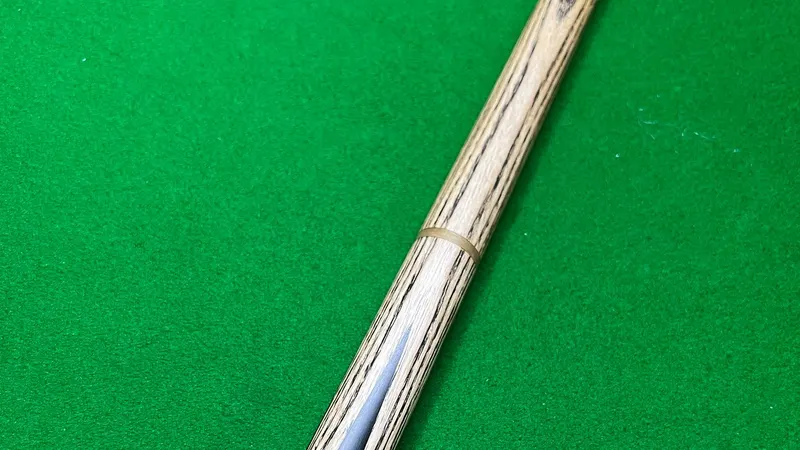
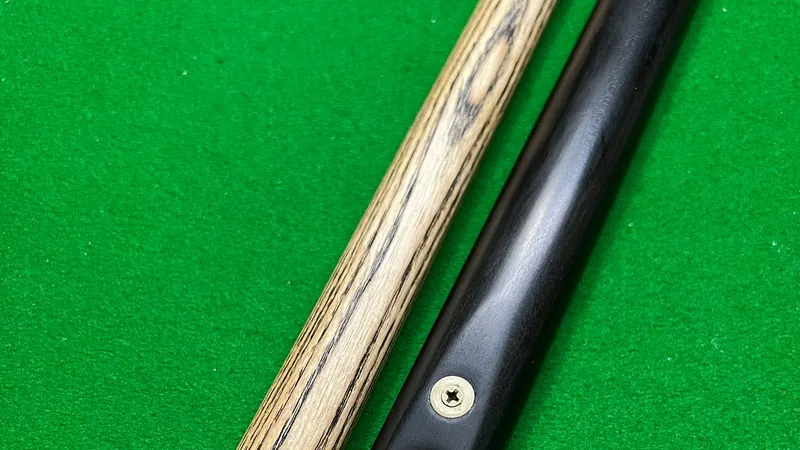
Ash or maple: choosing the wood for a snooker cue shaft
Why most snooker cues are ash, what maple feels like instead, and how the grain and the butt wood change the look and balance of a cue.
31 October 2026 · 1 min read
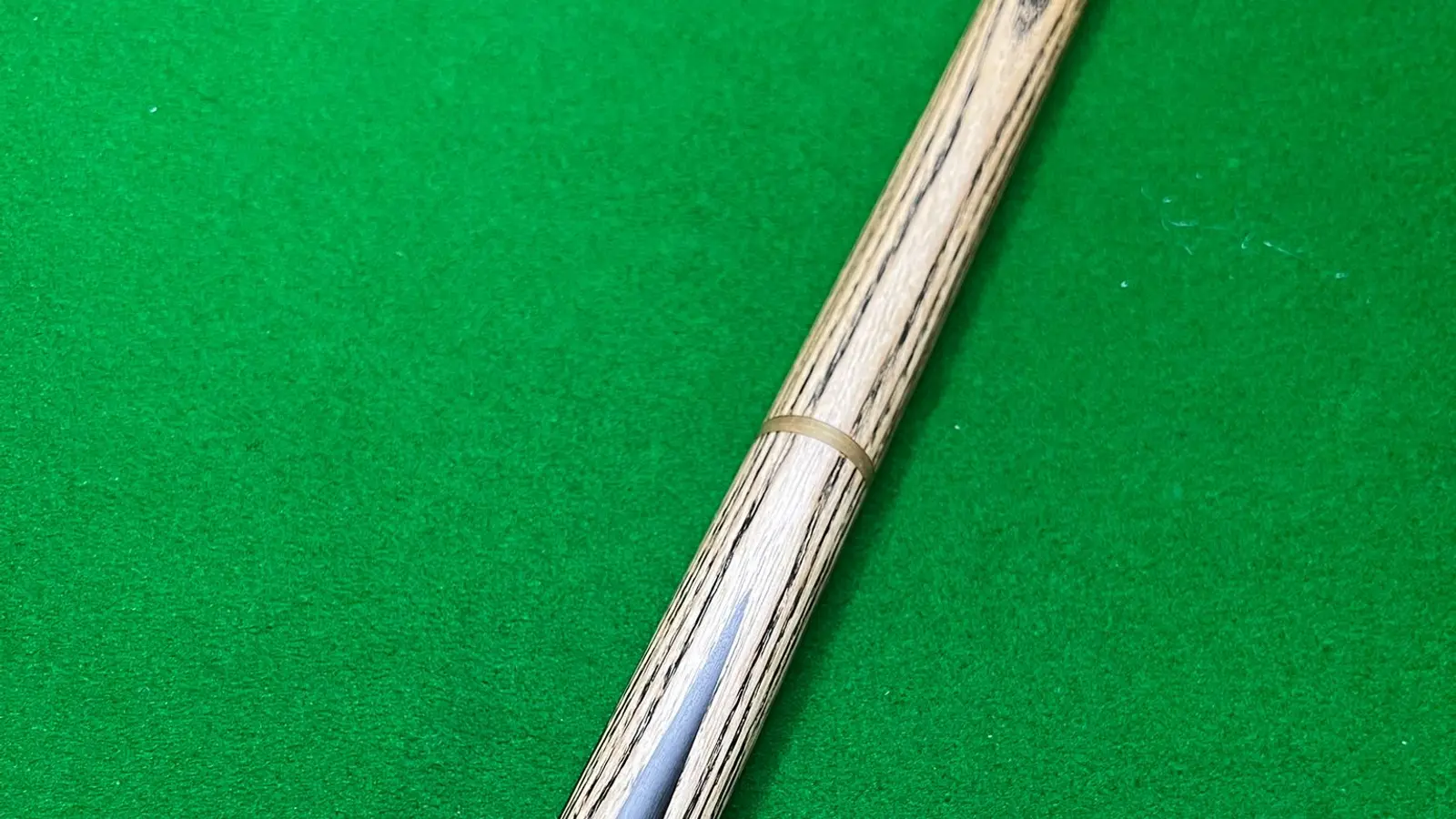
The joint is the first decision in the CueBuilder because everything else follows from it: how the cue feels, how you carry it and which case it needs.
No joint at all, so nothing between your hand and the tip but wood. Many players say a one-piece gives the purest feel and the most feedback through the cue. The cost is length: around 58 inches of cue needs a full-length case and a car with room for it.
The joint sits about three-quarters of the way down, so the shaft is one long piece and the butt is short. It is the most common choice among serious players because it keeps nearly all the feel of a one-piece, fits a shorter case, and lets you screw in an extension to the butt for long shots.
The joint is in the middle, so the two halves are equal and the cue packs down small. Easy to carry, but the joint sits right where your bridge hand works on long shots, and some players can feel it.
If the cue lives at one club, a one-piece is hard to beat. If it travels, a three-quarter is the sensible default. Whatever you pick, get a case to match.
31 October 2026
Why most snooker cues are ash, what maple feels like instead, and how the grain and the butt wood change the look and balance of a cue.
30 October 2026
How to pick a cue length and weight that suits your height, bridge and cue action, and when to change from the numbers you already use.
29 October 2026
What length, tip size and weight do to the way a cue plays, using the Barracuda specification as the example.