31 October 2026
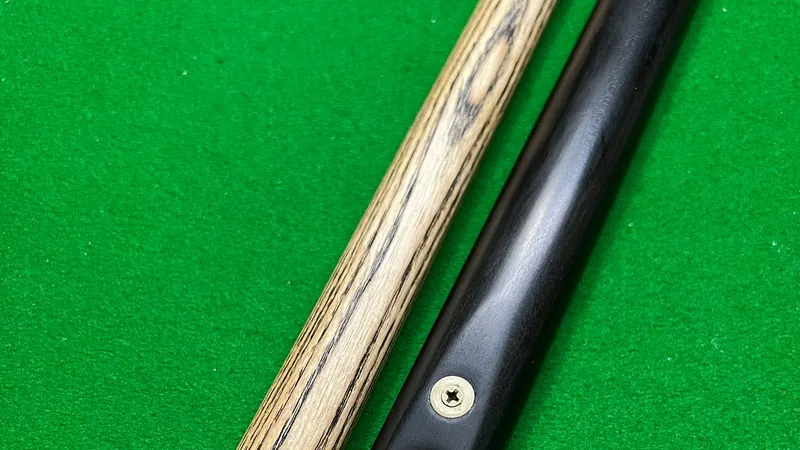
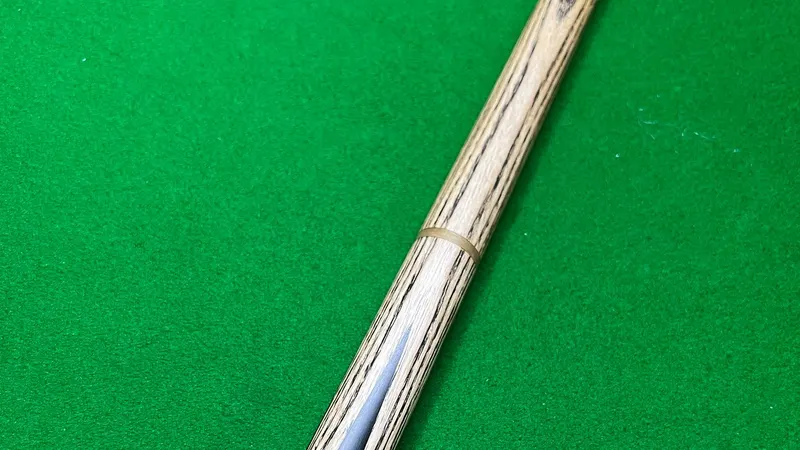
One-piece, three-quarter or two-piece: which snooker cue joint?
One-piece, three-quarter and two-piece snooker cues compared: feel, travel, extensions and cases, and how to choose the joint in the CueBuilder.
31 October 2026 · 1 min read
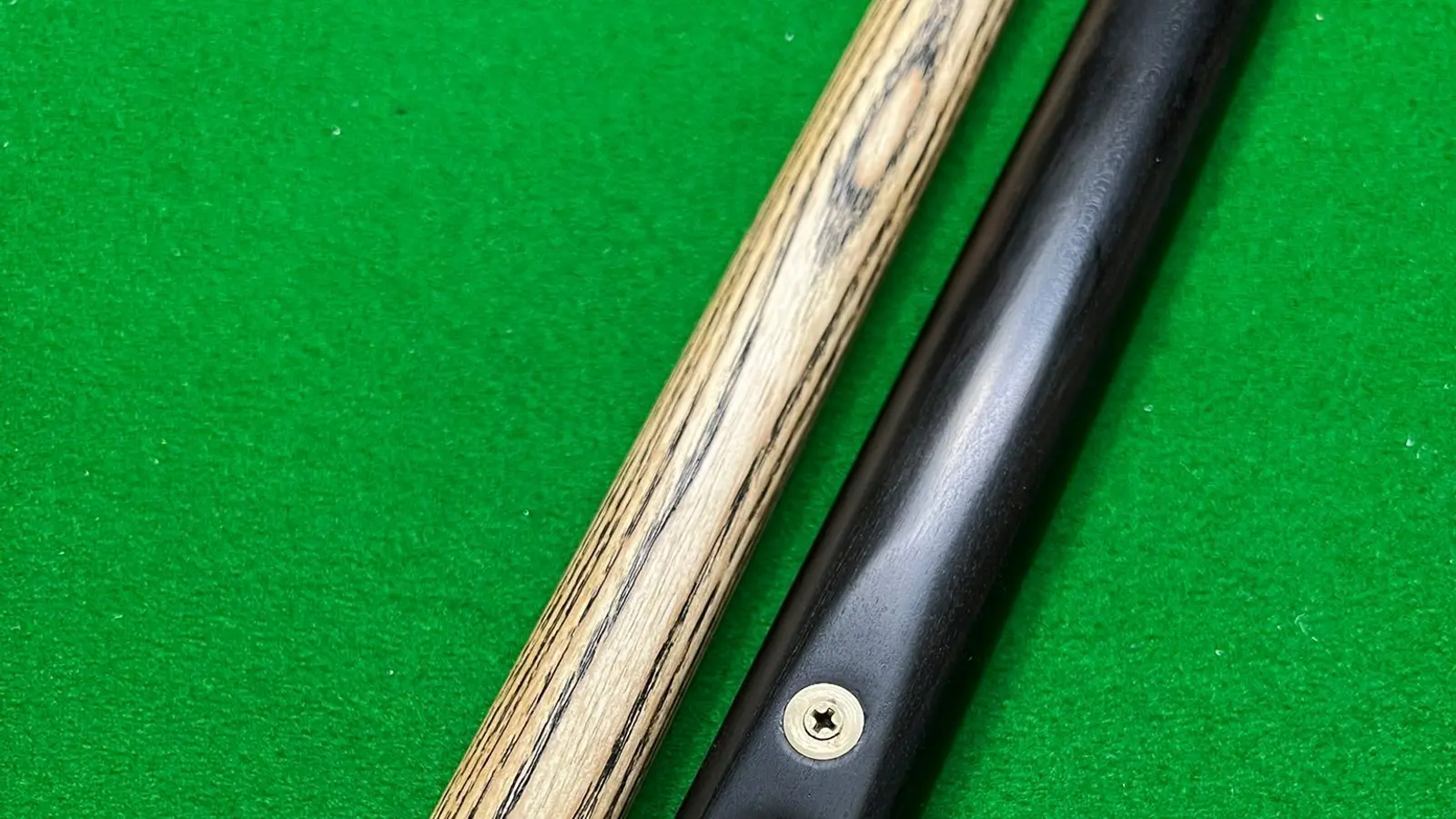
The shaft is the part of the cue your bridge hand feels on every shot, so the wood matters more than anything else on the cue.
Most snooker cues have ash shafts. The wood is strong and springy for its weight, and its open grain shows as arrow-shaped lines along the shaft. Many players use the grain to line up the cue the same way every time. Ash feels slightly textured under the bridge.
Maple is the usual wood for pool cues and some snooker players like it too. It has a tight, almost invisible grain and feels smooth and glassy under the bridge. It tends to play a touch stiffer. Players who dislike seeing the grain often prefer it.
More important than the species is the piece of wood. Straight, even grain running the length of the shaft keeps a cue straight for years. A cue maker picks shafts by eye and by hand, which is a large part of what you pay for in a handmade cue.
The butt is where the cue gets its looks and much of its weight. Dark exotic woods like ebony are dense, so they move the balance back towards your hand. Splices, the pointed inlays where the butt meets the shaft, are both decoration and structure.
The CueBuilder lets you choose the shaft and butt woods and shows the result in 3D before you order.
31 October 2026
One-piece, three-quarter and two-piece snooker cues compared: feel, travel, extensions and cases, and how to choose the joint in the CueBuilder.
30 October 2026
How to pick a cue length and weight that suits your height, bridge and cue action, and when to change from the numbers you already use.
29 October 2026
What length, tip size and weight do to the way a cue plays, using the Barracuda specification as the example.